Lexar THOR Z RGB DDR5-6000 2x16GB vs Timetec Premium DDR5-4800 UDIMM 2x16GB
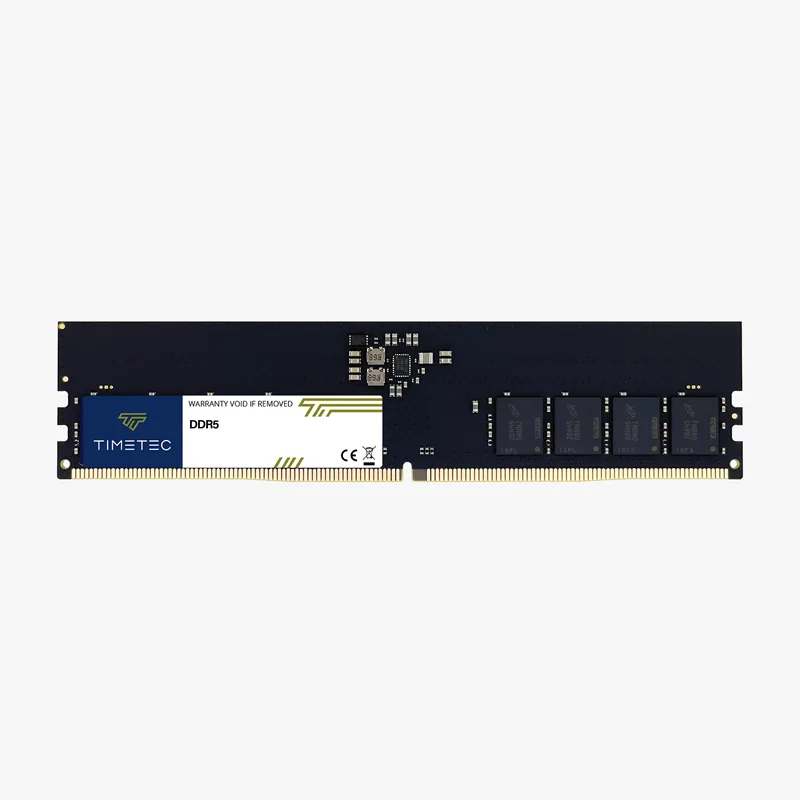 TimetecPremium DDR5-4800 UDIMM 2x16GB32 GB · 4800 MT/s · 40 CL · 16.67 ns
12.67 ns of true latency for Lexar THOR Z RGB DDR5-6000 2x16GB against 16.67 ns for Timetec Premium DDR5-4800 UDIMM 2x16GB, so the first of those is the quicker to respond. Lexar THOR Z RGB DDR5-6000 2x16GB is tracked at the lower price as well, so it leads on both axes this page measures.
| Specification | LexarTHOR Z RGB DDR5-6000 2x16GB | TimetecPremium DDR5-4800 UDIMM 2x16GB |
|---|---|---|
| Capacity (GB) | 32 | 32 |
| Speed (MT/s) | 6000better | 4800 |
| 38 | 40 | |
| True latency (ns) | 12.67better | 16.67 |
| Current best price | $629.99betterat Amazon.ca · captured 2026-11-14 | $649.99at Amazon.ca · captured 2026-11-14 |
| Price per GB | $19.69better | $20.31 |
Lexar THOR Z RGB DDR5-6000 2x16GB vs Timetec Premium DDR5-4800 UDIMM 2x16GB in detail
True latency
Lexar THOR Z RGB DDR5-6000 2x16GB is the lower-latency kit at 12.67 ns, against 16.67 ns for Timetec Premium DDR5-4800 UDIMM 2x16GB — a difference of 4.00 ns. That figure is what reconciles the two spec sheets: CAS latency counts clock cycles, so it only means something next to the clock it counts. Lexar THOR Z RGB DDR5-6000 2x16GB runs 6000 MT/s at CL38; Timetec Premium DDR5-4800 UDIMM 2x16GB runs 4800 MT/s at CL40.
Transfer rate
Lexar THOR Z RGB DDR5-6000 2x16GB is rated 6000 MT/s against 4800 MT/s for Timetec Premium DDR5-4800 UDIMM 2x16GB — 48000 MB/s per module, against 38400 MB/s. That is peak transfer rate, not access time: reaching a higher clock costs more cycles on each access, which is why the CAS numbers differ too, and why the true latency above is the figure that compares directly.
Price and tracked history
Lexar THOR Z RGB DDR5-6000 2x16GB is tracked at $629.99 — $19.69 per gigabyte — and Timetec Premium DDR5-4800 UDIMM 2x16GB at $649.99, or $20.31. Both are 32GB kits, so the totals compare directly: Lexar THOR Z RGB DDR5-6000 2x16GB is $20.00 less than Timetec Premium DDR5-4800 UDIMM 2x16GB. At $629.99, Lexar THOR Z RGB DDR5-6000 2x16GB is running 7% below its own 90-day median.
Kit layout
Lexar THOR Z RGB DDR5-6000 2x16GB ships as 2 × 16GB and Timetec Premium DDR5-4800 UDIMM 2x16GB ships as 2 × 16GB — the same number of sticks either way, so both populate a board's slots identically.
Voltage
Lexar THOR Z RGB DDR5-6000 2x16GB is specified at 1.35 V and Timetec Premium DDR5-4800 UDIMM 2x16GB at 1.1 V. That is the supply each kit's published profile asks the board for.
Lighting, timings and ECC
On the lighting question: Lexar THOR Z RGB DDR5-6000 2x16GB is published with RGB lighting, and Timetec Premium DDR5-4800 UDIMM 2x16GB does not have RGB lighting. On the full timing tuple, the numbers that follow CAS: Lexar THOR Z RGB DDR5-6000 2x16GB runs 38-48-48-96, and Timetec Premium DDR5-4800 UDIMM 2x16GB does not publish one. On error correction: the catalog does not state whether Lexar THOR Z RGB DDR5-6000 2x16GB supports it, and Timetec Premium DDR5-4800 UDIMM 2x16GB is published with no ECC. Whether ECC is worth having depends on the platform as much as the modules — the board and the CPU have to support it too.
Which to buy
Lexar THOR Z RGB DDR5-6000 2x16GB leads Timetec Premium DDR5-4800 UDIMM 2x16GB on both of the axes this page measures: the lower true latency, 12.67 ns against 16.67 ns, and the lower price of the two at what this site has tracked.
Common questions about this pair
- Is Lexar THOR Z RGB DDR5-6000 2x16GB faster than Timetec Premium DDR5-4800 UDIMM 2x16GB?
- Lexar THOR Z RGB DDR5-6000 2x16GB is, on true latency: 12.67 ns against 16.67 ns. Lexar THOR Z RGB DDR5-6000 2x16GB runs 6000 MT/s at CL38 and Timetec Premium DDR5-4800 UDIMM 2x16GB runs 4800 MT/s at CL40; the CAS numbers alone do not settle it, because they count clock cycles rather than time.
- Which one costs less?
- Lexar THOR Z RGB DDR5-6000 2x16GB, at $629.99 against $649.99 — $20.00 apart at the same 32GB.
- Which of these two should I buy?
- Lexar THOR Z RGB DDR5-6000 2x16GB leads Timetec Premium DDR5-4800 UDIMM 2x16GB on both of the axes this page measures: the lower true latency, 12.67 ns against 16.67 ns, and the lower price of the two at what this site has tracked.